

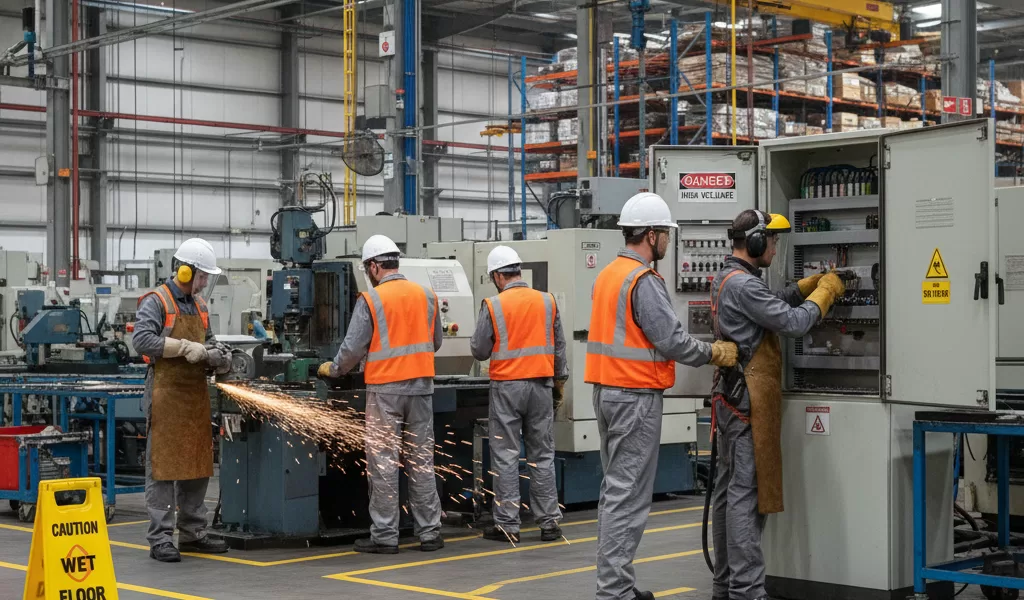
Top 10 Workplace Hazards and How to Prevent Them (US, UK & Canada Guide)
Table of Contents
- Introduction to Workplace Hazards
- Slips, Trips, and Falls
- Manual Handling Injuries
- Electrical Hazards
- Fire Hazards
- Chemical Exposure
- Machinery and Equipment Hazards
- Ergonomic Hazards
- Workplace Violence
- Biological Hazards
- Final Thoughts on Workplace Safety
- FAQs
Introduction to Workplace Hazards
Workplace hazards are one of the leading causes of injuries, illnesses, and lost productivity across industries in the United States, United Kingdom, and Canada. From construction sites and warehouses to offices and healthcare facilities, occupational hazards can affect any worker if proper safety measures are not in place.
Understanding common workplace hazards and learning how to prevent them is essential for employers and employees alike. This guide outlines the top 10 workplace hazards and practical ways to reduce risks while aligning with OSHA (US), HSE (UK), and CCOHS (Canada) safety standards.
1. Slips, Trips, and Falls
Slips, trips, and falls are among the most common workplace hazards and a major cause of serious injuries.
Common Causes:
- Wet or oily floors
- Uneven surfaces
- Poor lighting
- Loose cables or clutter
Prevention Tips:
- Keep walkways clean and dry
- Install anti-slip flooring
- Use proper signage for wet areas
- Ensure adequate lighting
2. Manual Handling Injuries
Improper lifting, pushing, or carrying can lead to musculoskeletal disorders and long-term injuries.
Common Causes:
- Lifting heavy loads incorrectly
- Repetitive movements
- Lack of training
Prevention Tips:
- Provide manual handling training
- Use mechanical lifting aids
- Encourage team lifting
3. Electrical Hazards
Electrical hazards can result in shocks, burns, or fatal accidents if not properly managed.
Common Causes:
- Faulty wiring
- Overloaded circuits
- Damaged electrical equipment
Prevention Tips:
- Regular electrical inspections
- Use certified equipment
- Train workers on electrical safety
4. Fire Hazards
Fire hazards pose serious risks to employees and property across all workplaces.
Common Causes:
- Flammable materials
- Poor storage practices
- Faulty electrical systems
Prevention Tips:
- Install fire detection systems
- Maintain fire extinguishers
- Conduct fire drills regularly
5. Chemical Exposure
Exposure to hazardous chemicals can cause respiratory problems, burns, or chronic illnesses.
Common Causes:
- Improper storage
- Lack of protective equipment
- Poor ventilation
Prevention Tips:
- Label chemicals clearly
- Provide PPE such as gloves and masks
- Follow OSHA, HSE, or WHMIS guidelines
6. Machinery and Equipment Hazards
Heavy machinery and tools can cause severe injuries if used incorrectly.
Common Causes:
- Missing safety guards
- Inadequate training
- Poor maintenance
Prevention Tips:
- Conduct regular equipment inspections
- Provide proper training
- Use machine guarding systems
7. Ergonomic Hazards
Poor ergonomics can lead to repetitive strain injuries and chronic pain.
Common Causes:
- Improper workstation setup
- Prolonged sitting
- Repetitive tasks
Prevention Tips:
- Adjust workstations ergonomically
- Encourage regular breaks
- Provide ergonomic chairs and desks
8. Workplace Violence
Workplace violence includes physical assaults, threats, or harassment.
Common Causes:
- Poor security
- High-stress environments
- Lack of policies
Prevention Tips:
- Implement zero-tolerance policies
- Train employees in conflict resolution
- Improve workplace security
9. Biological Hazards
Biological hazards are common in healthcare, laboratories, and waste management industries.
Common Causes:
- Exposure to bacteria or viruses
- Poor hygiene practices
Prevention Tips:
- Provide proper sanitation facilities
- Use protective clothing
- Follow health authority guidelines
10. Noise Hazards
Excessive noise can cause hearing loss and stress-related issues.
Common Causes:
- Loud machinery
- Construction activities
Prevention Tips:
- Provide hearing protection
- Monitor noise levels
- Use noise-reduction equipment
Final Thoughts on Workplace Safety
Preventing workplace hazards requires continuous effort, training, and compliance with safety regulations in the US, UK, and Canada. A proactive safety culture not only reduces accidents but also improves productivity and employee morale.
Frequently Asked Questions (FAQ)
What are the most common workplace hazards?
Slips, trips, falls, manual handling injuries, and electrical hazards are among the most common workplace hazards.
How can employers prevent workplace accidents?
Employers can prevent accidents by providing safety training, maintaining equipment, and following occupational safety regulations.
Are workplace safety rules different in the US, UK, and Canada?
While regulations vary, the core principles of hazard prevention are similar across OSHA, HSE, and CCOHS guidelines.