

Complete Guide to Personal Protective Equipment PPE in Workplace Safety
- What Is Personal Protective Equipment (PPE)?
- Why PPE Is Critical for Workplace Safety
- Types of Personal Protective Equipment
- PPE Standards in the US, UK & Canada
- PPE and Workplace Insurance: Hidden Financial Benefits
- How Employers Should Choose the Right PPE
- Common PPE Mistakes to Avoid
- PPE Maintenance, Training & Compliance
- Future of PPE and Smart Safety Technology
- Frequently Asked Questions (FAQ)
- What Is Personal Protective Equipment (PPE)?
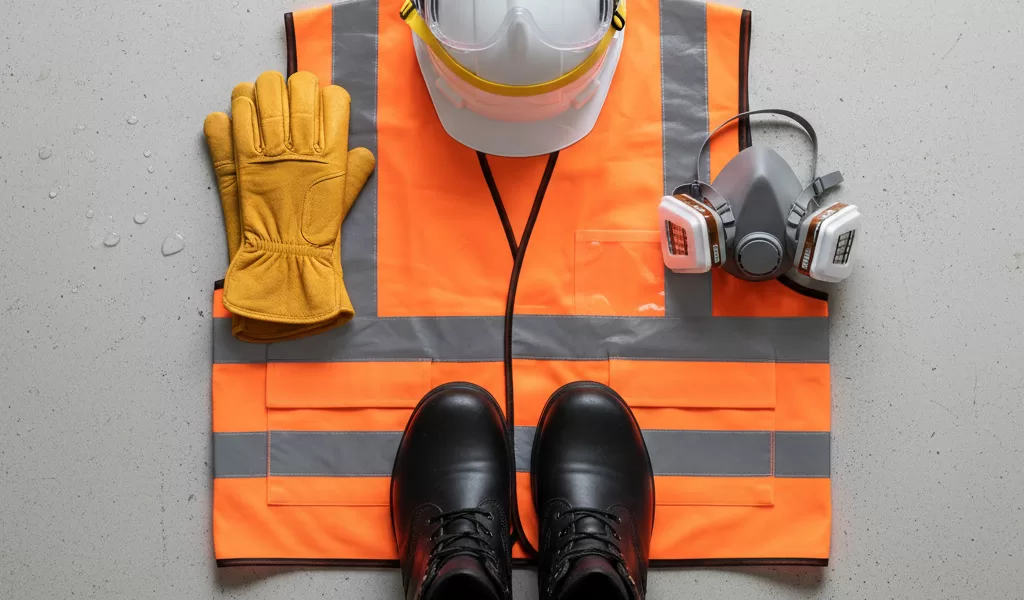
Personal Protective Equipment (PPE) refers to specialized clothing or equipment worn by employees to protect against health and safety hazards at work. PPE minimizes exposure to risks that may cause serious injuries, illnesses, or fatalities.
Industries such as construction, manufacturing, healthcare, oil & gas, and logistics rely heavily on PPE to comply with occupational health laws and reduce workplace accidents—an important factor in lowering workers’ compensation insurance claims.
- Why PPE Is Critical for Workplace Safety
PPE is the last line of defense when engineering and administrative controls are insufficient. Its importance goes beyond safety—it directly impacts:
- Reduced workplace injuries
- Lower accident insurance claims
- Improved employer liability protection
- Compliance with OSHA, HSE, and CCOHS laws
- Reduced business liability insurance premiums
In the US, UK, and Canada, companies with strong PPE programs often qualify for better workplace safety insurance rates.
- Types of Personal Protective Equipment
🪖 Head Protection
Protects against falling objects and electrical hazards.
- Hard hats
- Safety helmets
Industries: Construction, mining, utilities
👓 Eye & Face Protection
Prevents injuries from debris, chemicals, and radiation.
- Safety goggles
- Face shields
- Welding masks
🎧 Hearing Protection
Reduces exposure to excessive noise.
- Earplugs
- Earmuffs
Noise-related injuries often lead to long-term insurance claims, making hearing PPE essential.
😷 Respiratory Protection
Prevents inhalation of hazardous substances.
- N95 respirators
- Full-face respirators
- Powered air-purifying respirators (PAPRs)
🧤 Hand Protection
Protects against cuts, burns, and chemicals.
- Cut-resistant gloves
- Chemical-resistant gloves
👕 Body Protection
Protects torso and limbs.
- High-visibility clothing
- Flame-resistant suits
- Chemical-resistant coveralls
👢 Foot Protection
Prevents slips, crush injuries, and punctures.
- Steel-toe boots
- Anti-slip safety shoes
- PPE Standards in the US, UK & Canada
🇺🇸 United States
- OSHA (Occupational Safety and Health Administration)
- ANSI standards for helmets, gloves, and eyewear
🇬🇧 United Kingdom
- HSE (Health and Safety Executive)
- PPE at Work Regulations 2022
🇨🇦 Canada
- CCOHS
- CSA safety standards
Compliance not only avoids fines but also protects employer insurance coverage in case of accidents.
- PPE and Workplace Insurance: Hidden Financial Benefits
Proper PPE usage directly impacts insurance costs, including:
- Workers’ compensation insurance
- Employer liability insurance
- Business interruption insurance
- Accident & disability insurance
🔹 Fewer claims = lower premiums
🔹 Better risk profile = higher insurer trust
🔹 Strong compliance = reduced legal liability
Insurance companies often review PPE compliance during audits.
- How Employers Should Choose the Right PPE
Employers should:
- Conduct a workplace risk assessment
- Identify hazards
- Select PPE that meets regulatory standards
- Ensure proper fit and comfort
- Train employees on correct usage
Choosing low-quality PPE may increase insurance claim risks and long-term costs.
- Common PPE Mistakes to Avoid
- Using expired or damaged PPE
- Incorrect sizing
- Lack of employee training
- Ignoring PPE inspections
- Not updating PPE with new hazards
These mistakes often lead to denied insurance claims.
- PPE Maintenance, Training & Compliance
Best practices include:
- Regular PPE inspections
- Replacement schedules
- Mandatory safety training
- Documentation for insurance audits
- Incident reporting systems
Well-documented PPE programs help during workers’ compensation insurance investigations.
- Future of PPE and Smart Safety Technology
Modern PPE now includes:
- Smart helmets with sensors
- Wearables monitoring fatigue
- AI-powered safety alerts
- Connected PPE for real-time risk monitoring
These innovations reduce workplace accidents and improve risk management insurance profiles.
- Frequently Asked Questions (FAQ)
PPE stands for Personal Protective Equipment, designed to protect workers from workplace hazards.
❓ Is PPE mandatory by law?
Yes. PPE is legally required in the US, UK, and Canada under occupational safety regulations.
❓ Who pays for PPE?
Employers are legally responsible for providing PPE at no cost to employees.
❓ Can PPE reduce insurance premiums?
Yes. Proper PPE programs can significantly reduce workers’ compensation and employer liability insurance costs.